Category Archives: Upcoming Events
Ninja..Keyboard Ninja.

The world has become extremely familiar, more intimate, and smaller over the past decade or so thanks to the widespread availability of the internet across the globe. With a plethora of information at our fingertips, the world is quite literally within our reach. Tech savvy individuals become instant ‘experts’ mid conversation, with only a keyboard, high speed connection, and google at their fingertips. Laptops, tablets and smartphones keep us instantly connected and online. This can be a good thing, after all, knowledge is king..right? Well, sometimes, yes. Sometimes, these internet search engine champs know just enough to have it backfire.. ending with a foot in the mouth before they disappear with a stroke of the key.
Social media has become an enabler for this type of behavior; popular chat groups have become rife with trolls, and ‘wannabe’ experts alike. Armed with a limited arsenal of search engines, online encyclopedias, and the trusty copy, cut, paste option, these Keyboard Ninjas are ready and willing to take on the world. No matter the topic, and no matter the experience (usually minimal, or none) these Internet Warriors gallantly spout figures, statistics, beliefs, and opinions with no regard to investigating the legitimacy prior to posting them. For those with little experience, no humility, and a warped understanding of basic etiquette and respect, the internet is the perfect medium. Where else can a young inexperienced student, or an older, but mentally immature martial arts practitioner argue and be rude with a senior and more experienced practitioner, and get away with it? Face to face meetings would never happen, and when these meetings are suggested or offered.. poof! the internet ninja disappears with the stroke of key. It’s the online equivalent of a kid who can’t get his way, or begins to lose, so..he takes his ball and goes home. The same result happens, when after a series of opposing arguments, facts are proven to dispute the claims of the ‘internet ninja’ on a topic which was originated by said ‘ninja’..Poof! Delete. The topic, or post disappears, and so does the ‘internet ninja’.
How do we change it, or influence change? The answer is simple, but not always easy. We have to identify these types first, and then disengage from pointless internet conflict. It isn’t always easy because many of us, have a desire to help people, even if it means stopping the spread of misinformation, and lies that are spread by some of the folks..it’s a public service to the martial arts community in which many serious martial arts practitioners and researchers readily engage.
The first identifier: People that are always argumentative, although their original posting or question may seem legitimate, these types are rarely interested in conflicting opinions or ideas that differ from their own. Instead, they are seeking mass validation for an idea that they already believe, and have no interest in opposing ideas, or facts that prove them wrong. When facts (not opinions) are presented, these types often get defensive and lash out by changing the topic or personally attacking (verbally) the presenter of the opposing facts.
The second identifier: They love the bandwagon. Yes, these ‘internet ninjas’ will band together, regardless of personal knowledge of the subject matter, they love to jump on board in an attempt to lend credibility to the other ‘internet ninjas’. Their comments are the equivalent of the bystander during an argument that is contantly over the shoulder of one, shouting: ‘that’s right!’ ‘you tell him!’ No substantial content is offered during the conversation.
The third identifier: They are always right. period. If/When proven wrong, the ‘internet ninja’ refuses to accept correction. They live their lives with the proverbial ‘full glass’ with no room for even a drop of new information. They have it all figured out, and of course, they are happy to tell anyone that will listen. Rarely do we see these types post to legitimately ask for help. Often their inquisitive postings are simply disguised to draw others in that will agree with them. “What is your opinion of_________” As long as the folks replying are in agreement, the conversation is smooth. But when someone replies with an alternate opinion, watch out!
Does this mean that we should avoid these types altogether? NO. they are unavoidable. As long as ego is present in the human psyche, they’ll always be around. Don’t avoid them, but take steps to learn to identify them, and deal with them properly. They’ll argue all day long with you, and feel that they are right. Don’t allow yourself to fall into that trap. Be prepared by arming yourself with verifiable facts to prove/disprove an incorrect opinion. If you don’t have the facts, don’t fall into the trap.
My personal stance of internet etiquette: In general, I communicate with everyone online as if I’m speaking to them face to face. Good or bad, pleasant or unpleasant, those are my personal rules. I should add, this means that I don’t type anything online to someone that I wouldn’t say to their face. I have one identity; I am the same in person and online. Mutual respect, proper etiquette, integrity, and humility are essential, either online or in person. Anyone that doesn’t live by and follow these guidelines have no place in my life, and I won’t waste time with them.
G Parker
Overload

This is how I feel as I attempt to write this article; most writers occasionally get writers block; they get an idea, start writing, and then…nothing. I have quite the opposite issue right now. I am in hyper-drive, sensory overload from a writers viewpoint, that is. I enjoy writing, I may even go so far as to admit that I really, really like writing..a lot. (Love is such a strong word.) So, when I don’t write for a little while, I feel an emptiness in my being; paradoxically, I feel as if I’ll burst if I don’t write something..anything, just to get it out of me, and onto paper or the screen.
The past 6 weeks have been a whirlwind of training, preparation, and generally just being extremely busy every waking moment of every day, as I readied myself and my students for the arrival of my teacher, Takamiyagi Sensei, from Okinawa. He stayed with my family in our home for three weeks, and just went back home yesterday morning. While he was here, we trained, reminisced on old times, told stories, worked on multiple projects, ate great food, drank lots of green tea, trained some more, went to museums, took road trips, trained, and oh, did I mention how much we trained? Yes. that much. Usually 6-8 hours every day, a little less on Sundays, but still we trained daily. I only thought about writing very briefly while I was translating content for his next book; otherwise, I was occupied to the extent that I had no time to think about writing, or any other leisure/fun activity.
Yesterday evening, I finally felt recharged and began to think about what to write, and then it hit me; I have no idea! I’m overloaded! My brain is so full of all the experiences from the past month that I honestly am having a hard time compartmentalizing it all at this point. Still, I wanted to write something, if only to knock the rust off, and get a little practice for a real article with meaningful content.
For now, I’ll finish with this: I was excited to have my Sensei here in America for the first time in his life, and of course, I am aware of the historic significance of this auspicious occasion. The training, sharing, and open-mindedness that my teacher exhibited with my students, friends, and visiting martial artists that attended our annual Goshukan Gasshuku was fantastic and heartwarming as well; what really made it special though, was when Sensei referred to me on many occasions as his ‘other son’ and ‘ichiban deshi’. There is no higher honor in my mind, and that, my friends, still has me on overload.
G. Parker
A Life of Regret
 Your family gathers around to say ‘I love you’ for the final time; friends hold your hand and look into your eyes as they fight hard to keep the tears from rolling off of their chin..onto your cheek. Those that meant the most to you in life, have gathered to say goodbye and to comfort you, and each other, as you prepare to leave this world forever. In those final moments, as you fight for every breath, your life flashes through your mind like a chaotic time machine. The memories are unorganized and shockingly realistic. You relive the moments that have become your most precious memories, your priceless treasures that no-one can take from you. You relive those Saturdays spent with your dad on the lake, your first home run in little league, your first kiss, your first true love, and the birth of your child. You vividly recall your daughter’s wedding…my God, she looks like an angel! You can see the vivid white train of her wedding dress as the sweet scent of rose petals from the chapel isle waft ever so gently to your nostrils. Your heart begins to beat faster, and you can hear the music, and even smell the wedding cake. Thoughts race on: You recall the feeling of accomplishment as you sat it your cap and gown waiting to hear you name called as you graduated from high school, then college.. or you remember being away from home for the first time, and wondering how in the hell you ended up in O.D. green on the other side of the globe. You remember the friends that became brothers in arms, and then brothers for life.
As your heart pumps more slowly and your lungs struggle to process enough oxygen to keep you conscious, your mind is racing. You smile, you twitch, you grunt or squeal.
Then, your brow furrows. The corners of your mouth turn down as your bottom lip presses hard against your top lip.. and you try to stifle the increasingly uncontrollable quiver. The tears begin to burn as they roll down your face, then you feel the one emotion that you have dreaded the most. Regret. It burns, it grips your chest like a vice, and the more you try to get it out of your head, the stronger it gets. All those things you wanted to do, but didn’t. Too many other commitments, not enough time, your back or your knee was bothering you, so you put it off until “next time…again. Finally, next time never happened, and here you are facing your final curtain with friends and loved ones all around. But all you can think about is..what you should have done, could have done, and would have done, if only you had another chance.
But, this is your life, your only one, and guess what? There are no do-overs. NONE. Zero. Nada. You have to get it right the first time.
If you are reading this, and you are still in relatively good health, then you still have a chance to LIVE your life. Take a chance – Take LOTS of chances! Make sacrifices. Do something because you WANT IT, even if it hurts. You don’t have to be that man/woman in the beginning paragraph. Travel, save up for that trip you’ve always dreamed about, or hop in the car and drive somewhere tomorrow. It doesn’t matter, just do it! Help people help themselves for no other reason than “It makes me feel good, because it makes them feel good”. Write an article, a poem, or a book. Make something with your own hands. It doesn’t have to be extravagant, it just has to be your creation. Take that road trip, learn to cook, learn a second language..or a third.
Life is busy, life is hectic; it always will be. Take time for yourself, don’t be a slave to your job. No one ever says on their deathbed “I gave 50 great years to my company, and it was worth every minute.” Yes, we need to be gainfully employed to pay our bills, take care of our families, and have a little fun along the way, but we don’t have to be shackled!
By now you’re probably wondering: “Why hasn’t he mentioned martial arts yet?” Great question, I’m glad you asked!
Support your friends. Train with them, laugh and hurt with them. Train when you’re feeling great, and train when you’re feeling rotten. Train when you work overtime, and train when you get laid off. Train when your life is terrific, and train when your life is stormy.
Recently, I’ve made contact with a dozen or so students that have stopped training over the past couple of years. Nothing pressing, just a simple “Hi, How are you? I hope all is well.” kind of greeting. Each one of them stopped training for different reasons; for most of them, those reasons have passed, yet they haven’t returned. Some still have issues: health, money, work, etc. Or at least they think that these are issues. The truth is: every issue can be overcome with a little sacrifice and willpower. A couple of former students that I’ve spoken to over the years are already experiencing regret; “Sensei, I wonder where I would be if I were still training?” Well, you’d probably be in the dojo. “No, I mean..would I be a black belt, or even an instructor?” No, probably not.. because you quit training. Ouch.
Don’t misunderstand; there is more to life than karate, and honestly, it just isn’t for everyone..and that’s ok. But it is for me, and is a very large part of my life; yes there are other things in life that I want to do before I’m that guy in the first paragraph, and I have a plan to do them all. If I don’t accomplish everything that I want to achieve before I die, it won’t be because I didn’t try, and there will be no regrets.
G. Parker
The Silent Warrior
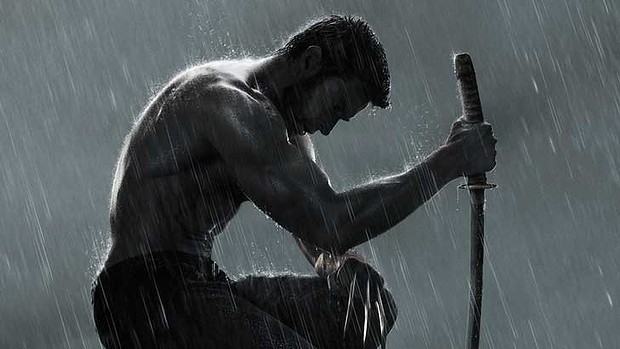
The hardest battle is within; every martial artist has heard this time and time again, and knows this to be true. The battle within our self often goes unseen, un-discussed, and covered up. Yet, the battle rages on. Sometimes, we seek help, advice, and solace from our friends, family, and professionals, but most of the time, we don’t. Emotional battles, psychological battles, and looming depression are issues that no one likes to talk about; we, as martial artists, train to be strong – in body and mind – so, when we have these internal battles, they are almost always compartmentalized, stifled, and kept inside. While this may seem like the ‘right’ way to handle it, nothing could be further from the truth. Bottled up emotions, anxiety, and depression is dangerous. The emotions are controlled initially by sheer willpower, and then the emotions become stronger and uncontrollable. When the will is no longer sufficient to handle the sadness, loneliness, stress, and feelings of despair, the warrior often turns to other sources to block the pain; the most common being alcohol and drugs. This works for a little while too, but it’s a temporary relief for a constantly growing, intense pain from within. Eventually, the pain becomes too much to bear; the loneliness, despair, and feeling of absolute helplessness becomes so overwhelming that the man or woman suffering, can only see one logical solution..only one way to cure the pain. They may or may not realize the hurt, the grief, and the shattered lives of the family, friends, and loved ones they leave behind, when they reach the point of no-return. They only want the pain to stop.
Yesterday, the world was shocked to hear that Robin Williams had taken his own life; Mr. Williams was an icon in American television and Cinema over the past 4 decades; he was well-loved, respected in his craft, extremely talented, physically healthy, and wealthy. But..Robin Williams was a lonely, distraught, and severely depressed man. By his own admission, he had battled alcoholism that was fueled by depression, and he even spoke candidly about the subject in a recent televised interview. Robin Williams spent his life making other people laugh, yet he had no joy. With all of his success, his fame, and even his loving family, he was fighting a raging battle of constant sadness and loneliness that no one else could see.
This seems to happen with celebrities, powerful people, and public figures more than anyone; Perhaps it’s the stress of being under constant public scrutiny, or being expected to be perfect all the time. Police officers, war veterans, martial artists, are in this category of powerful people, and public figures to an extant. Police officers and combat veterans routinely see things that can’t be unseen. The experiences become memories, and the memories become nightmares. The combination of memories, PTSD, stressful working conditions, family or financial problems, are often too much to bear. The other variable is that police officers, soldiers, and martial arts teachers are the ones that others depend on for strength. In our own eyes, we aren’t allowed a moment of weakness, sadness, or depression; even within our own peer group, it’s an unspoken assumption of weakness to reach out and ask for help. This has to change. NO-ONE is immune to depression. NO-ONE should feel so strong that we can’t or won’t ask for help. Very recently, a friend and martial artist took his own life; a man that I had trained with, laughed and talked with, on numerous occasions in North Carolina. Paul was a highly ranked, highly skilled, and well respected Matsubayashi-Ryu Karate teacher. He had a great life, or so we thought. It’s always shocking to find that someone was silently battling demons that we knew nothing about. Did we miss warning signs? Did we miss an opportunity to help? Did we listen enough? These are all haunting questions that can never be answered. Anyone that has lost friends or loved ones to suicide will always have these questions looming over them.
To everyone reading: please understand that no-one is immune to depression. This can be brought on from a number of sources, and untreated, can be fatal. If you know anyone battling depression, please extend your hand and your heart; reach out and help them, even if they push you away or become angry for meddling. It isn’t about you, it’s about them, so have thick skin and be persistent.
If you are sad, depressed, and even considering leaving everything behind, please call 1-800-273-8255. This is the National Suicide Prevention Hotline. There are people that want to help you. Depression is a raging, silent battle, and is something that I have dealt with on a very personal basis. You can fight it, and you can win. But you can’t do it alone.
G. Parker
15th Anniversary Gasshuku
ONLY 2 MONTHS AWAY! Register now, if you haven’t already done so;
REMEMBER: We are offering HUGE DISCOUNTS for multiple registrations;
Register 4 and the 5th is FREE!


The Controversy of Itsou
 Widely recognized as the man responsible for Okinawan karate’s transition from the private dojo and backyards of Okinawa, from the veils of secrecy to the limelight, and primarily for the introduction of Okinawan karate to the public schools, Itosu Anko’s place in history is solid and universally accepted. His famous letter, now widely known as ‘Itosu’s 10 precepts of karate’ was undeniably nationalistic with an overbearing political flavor, as he campaigned to bring to-de out of the shadows and into the accepting arms of the Japanese government.
Itosu is famous (or infamous) for creating the five Pinan kata for the purpose of introduction to school children; he is also allegedly responsible for breaking naihanchi into separate kata. Among some intermediate and senior (Western) karate practitioners, this in particular seems to be a source of controversy; some are even talking seriously of dropping pinan kata from their syllabus, citing that, because of their intended nature as introductory kata to school children, the pinan are no longer useful in comparsison to more advanced kata such as passai, chinto, kusanku (from which the majority of pinan is drawn) and useishi/gojushiho. A few have even accused Itosu of being responsible for the weakening or ‘watering-down’ of Shuri-te, simply because he introduced new kata, and was responsible for making karate public.
How do people overlook his obvious contributions to all of Okinawan karate so easily? How do they not read and comprehend what karate really meant to him. Let’s review the 2nd point of his ‘1o Precepts’
2.The purpose of tode is to make the body hard like stones and iron; hands and feet should be used like the points of arrows, hearts should be strong and brave. If children were to practice tode from their elementary-school days, they would be well prepared for military service.
This doesn’t indicate that Itosu was attempting to ‘weaken’ or ‘water-down’ karate; in fact, it indicates that Itosu believed that introducing hard karate training to school children would prepare them to be more effective warriors.
Itosu was a visionary, a pioneer, and he was the catalyst for karate’s public introduction and widespread acceptance. If not for his efforts, you and I may very well have never had the opportunity to learn Okinawan karate. People are quirky I suppose, As a new student, we (that practice shuri-te based ryu) struggled to learn the 5 pinan; we looked forward to becoming proficient enough to move on to the next one, and personally, I felt a great sense of accomplishment after having learned the five pinans, and being allowed to learn passai. If we are to drop fundamental and entry level kata, can we also drop fundamental and entry level kihon? Can we drop chudan uke, mae-geri, and gyaku-zuki after we’ve become proficient with kyusho and tuidi based defense? I suppose we could, but then again, people do illogical things all the time.
So, what is that drives the desire to drop kata from the syllabus; what entitles a karate practitioner to summarily dismiss basic kata once they have learned more advanced kata? I don’t know the answer, honestly; I suppose it depends on the experience level of the practitioner. If he/she has been training for 50 years and has learned all that their teacher taught them, perhaps they’ve earned the right to add or drop kata. This is commonly known as ‘Ri’ or transcendance (remember shu-ha-ri). At this level, karate-ka are considered masters, and have earned the right to ‘customize’ or change their art, and many do; in fact, this is common. If teachers never changed anything, there would be no splinter groups, different ryu, or kai, within the same styles. However, it could also be that these karate-ka have lost their ‘sho-shin’ or, beginner’s mind. This, I believe, is the more common problem; if someone has been training for only 10 or 20 years, they are very likely still at the ‘shu’ level of Shu-Ha-Ri. They are expected to conform and adhere, without question, to everything that is taught.
Over the years, my teacher has constantly reminded me of one thing – basics. Always practice basics. In nearly every conversation, no matter the topic, he will always ask about it, or sneak it in the conversation; it’s that important. Kihon are the building blocks of karate. Pinan kata could very well be considered among the building blocks of shorin-ryu, along with the naihanchi kata. To me, and to most Okinawan teachers, they are. To others, mostly Western karate practitioners, no so much.
G. Parker
Priceless Treasures
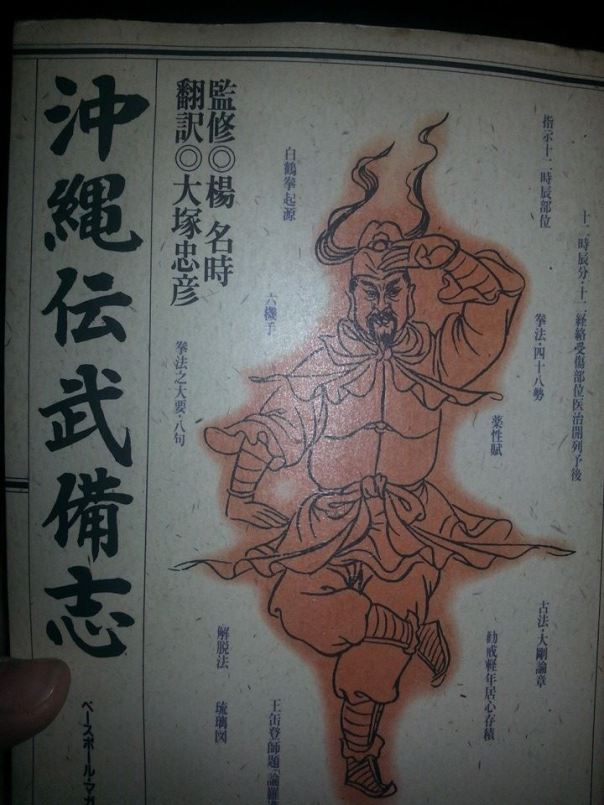 These past few day have been spent slipping into short bursts of reminiscence as I’ve pored over old photos for inclusion in my book; with the 15th Anniversary Gasshuku only 2 1/2 months away, and Takamiyagi Sensei’s arrival in only 7 weeks, I’ve been looking at old photos, mementos, and gifts that I’ve accumulated over the years. Each one tells a story of the time and occasion, and for me, it’s a private time capsule that takes me back in my mind to the place or event where each gift was presented. I’ve received, t-shirts, challenge coins, cups and mugs with different dojo emblems, I’ve received custom weapons, banners, and books. Due to the auspicious nature of this year’s gasshuku, I’ve received several inquiries about gifts for the occasion; my answer is always the same; dollar value isn’t important at all when giving gifts from the heart; I prefer to give something that is personal to me will always be appreciated more than something that anyone can buy. This year, I’ve chosen very personal gifts for my friends and supporters that have helped make this year’s gasshuku possible; the dollar value isn’t really high, but it’s something that can’t be bought anywhere.
At the end of a training trip in 2003, I was given the copy of Okinawa Den Bubishi (seen in the accompanying photo) by my teacher on the day I left Okinawa to come back home. Although these copies can be easily purchased in Okinawa, mine is special because my teacher gave it to me; not a copy that he had picked up a few days ago to give to, but his personal copy with his handwritten notes and comparison on the pages. To me, this is a priceless treasure, and one of my most prized possessions.
Throughout your martial arts journey, you will accumulate these little trinkets, treasures, and mementos; when we first receive these gifts, they are very much appreciated, but like fine wine, their value increases with age as they remind us of friends and teachers that have enriched our lives; these men and women that have made our journey even sweeter, are the true priceless treasures.
G. Parker
Iaido and the Beginners Mind.

Shoshin – Beginners Mind. Most traditional Okinawan and Japanese martial arts practitioners are extremely familiar with this term. For me, this term came springing to life in vivid color when I began the study of Mugai-Ryu Iaido a little over a year ago. As a lifelong karate practitioner, I’ve cross-trained in many martial arts over the past three decades, and have been able to adapt fairly easily.
Enter: The Sword. I found very quickly that the principles of power, speed, and movement do not transfer easily from karate to iaido. It was frustrating, but I’ve always been stubborn, so I stuck with it, accepted corrections, and continued training and practicing. What draws me to Iaido is nearly the polar opposite of what drew me to Judo, Kung Fu, and Karate. I began training in high school for self-protection, and continued into adulthood. I’ve learned more than I ever imagined, and have used my skills on countless occasions in the line of duty. I started like everyone does – tying on a white belt and standing in the back of the dojo trying to keep up. Over the years, I’ve advanced in skill and rank, earned recognition, respect, and friends all over the world.
Iaido is none of that to me: I am 99% certain that I’ll never have the opportunity or the need to defend my life or my loved ones with the sword. Still, I train. There is something very special about being accepted into a small fraternity of people that still train in the ways of the warriors of ancient Japan. There is no promise or expectation of rank. There is only training. We practice and we learn. We conform to the methods set by generations before us. If rank comes, it comes. If it doesn’t, it doesn’t. If you want a black belt, no problem, wear one…or white, or blue, or mustard, or pink, or green. The kaku obi has one purpose, to hold my sword. Color doesn’t matter, as Iaido doesn’t traditionally recognize kyu ranks (normally associated with colored belts). We train to gain skill, to carry on the old ways, and to do our small part of preserving the ancient arts. This is enough.
Iaido isn’t for peasants. That was true then, and is true now. Many people fade away or quit training when the reality of Iaido related costs becomes apparent to them. Initially, a couple hundred (US) dollars is required for purchasing basic equipment (keiko-gi, hakama, kaku-obi, and bokken). Later the iai-to and shinken will need to be purchased, this can easily run close to a $1000 for economy models, and up to $3000 for a quality Japanese blade. There is a reason that Iaido is called “the expensive hobby!” When we begin cutting (tameshigiri) the costs accumulate even more rapidly; I’m already finding that the economy blade that I purchased last year wasn’t cutting it- pun intended. So, I recently purchased another higher quality blade. Add in the tatami for cutting, accessories such as new sageo, tabi, various kaku obi, etc. and you may find that you need a part time job to support your new Iaido habit!
This, in my opinion, is one of the reasons that some people quit Iaido within a few months. The costs can be overwhelming, along with the visions that they too would be magically transformed into a samurai were soon dashed as the students realized that Iaido practice is hard work; this coupled with the stark reality that they should expect to train and practice for a very long time with little or no chance of rank advancement, relatively speaking in comparison to karate.
Some stick to it, others fade away. In our dojo, we have had three karate students quit Iaido this year within a few months of starting; Iaido is hard work, requires intense focus, and the rewards come in the form of training. For those that have already been training in other martial arts for a while, Shoshin (beginners mind) is imperative to progress.
While I’m learning a lot and having a great time doing it, I realize that Iaido just isn’t for everyone.
G. Parker
THE PURGE
 Toward the end of every year I take a look back at my attendance logs, promotion records, and disciplinary records to evaluate all of our students. These aren’t face-to-face evaluations, they’re simply for my knowledge.
This is also the time of year that I purge the rolls of those who have quit or become inactive for whatever reason they may have offered.
For some, it’s work; for some, illness/injury that has since healed, yet the student hasn’t returned to training.
My personal policy is to purge students from the rolls who have been inactive for 12 months, and have not communicated the desire to return to training for 3 months.
From time to time, I’ll hear “I haven’t quit training, Sensei, I’m still a student and I’m coming back.”
No, that isn’t accurate, sorry to break it to you. If you take a semester off from college, you’re taking a break. If you miss a couple of semesters, you are a dropout. You’re no longer an active student, no matter what your intentions may be, no matter if you are still studying at home. If you aren’t enrolled, attending classes, and making progress, then you are no longer a student.
Sadly, this year’s purge will place many student’s on the ‘former student’ list. When students are purged from the rolls, their name is also removed from the nafuda-kake (name boards) on the wall of the training floor. Some are offended when they find their name has been removed, yet this is only because they don’t understand that it is a space reserved for those dedicated students that are currently training and growing.
No one wants to admit that they are a quitter or a dropout; it’s easier to say “I’m taking a break.” Usually it’s their ego, or subconsciously not wanting to admit failure; everyone of us commonly associates quitting or giving up with failure.
In my dojo we call it The Green Belt Curse because students at the green belt (6-kyu/5-kyu) level are the most common dropouts. I even go so far as to warn newly promoted 6-kyu students about the ‘green belt curse’ yet, it still happens. Some drop out at yellow belt, and have even had a few drop out at the brown belt and black belt level, but by far the dreaded green belt curse still reigns supreme.
Why the purge? Is it really necessary? To me, yes it is necessary. Those who are inactive for long periods of time have grown stagnant. Stagnancy is the opposite of growth, therefore, the two cannot logically co-exist in a productive manner. However, it doesn’t have to be permanent. Those who are inactive and have left on good terms will always find an open door and space on the mat to train, when they are truly committed to training once again.
G. Parker


 Columbus Dojo